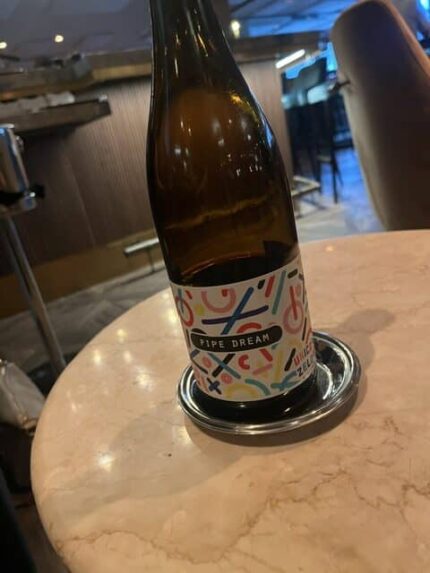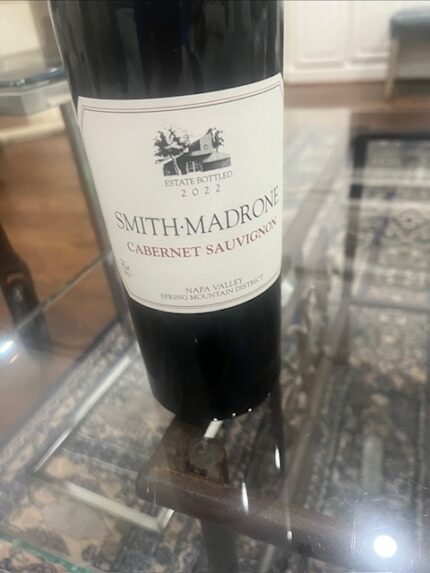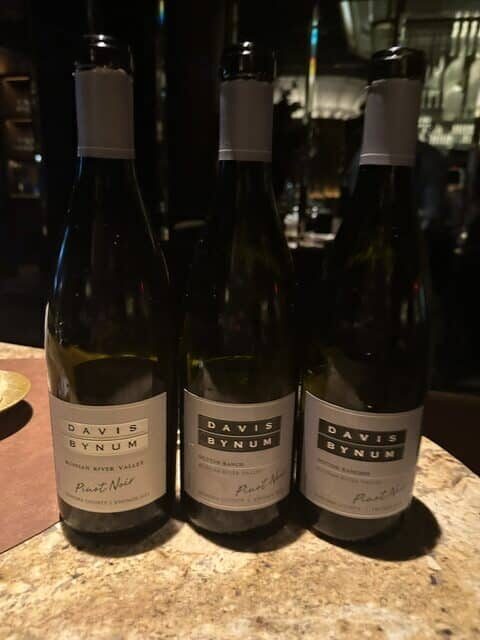
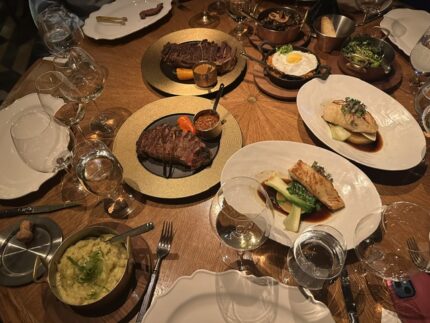
Recently, I had the chance to sit down with three amazing representatives from Rodney Strong Wine Estates. Chris O’Gorman (Senior Director of Communication), Chad Culley (Texas Market Manager) and Greg Morthole (Winemaker!). We met at Nuri Steakhouse in Dallas for some delicious food, wonderful wines and great conversation.
Davis Bynum has a long Sonoma history, including pioneering single-vineyard Pinot Noir from Russian River Valley grapes in 1973. The brand was sold to the Klein family, who run Rodney Strong, in 2007, and Greg Morthole has been the winemaker there for about two decades.
Greg Morthole’s main contribution has been steering Davis Bynum’s winemaking since his promotion in spring 2010, when he was put in charge of all winemaking and related operations. He’s also been credited with keeping the wines aligned with the winery’s original philosophy while using a low-impact, vineyards first approach.
What he’s known for
Overseeing all aspects of Davis Bynum’s winemaking after 2010.
Carrying forward the brand’s legacy and emphasizing balance, freshness, and site expression.
Applying a “let the land speak” style, focusing on what happens in the vineyard and during fermentation rather than heavy cellar manipulation.
Producing current releases of Pinot Noir and Chardonnay for Davis Bynum during his tenure.
Why it matters
Davis Bynum is a historic Russian River Valley label, and Morthole’s role has been to preserve that identity while modernizing quality and consistency.
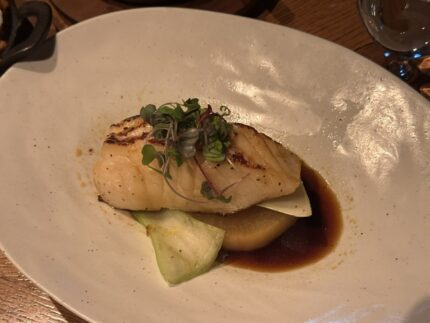
A simple way to think about his contribution is this: Davis Bynum provided the historic vision, and Morthole has been the person translating that vision into bottles year after year. His style is described as focused on balance, vineyard character, and gentle handling, rather than making wines taste overly engineered.
How Greg Morthole’s low-impact winemaking philosophy has shaped Davis Bynum’s Production Methods
Greg Morthole’s low‑impact, “most of the work is done in the vineyard and at fermentation” approach has kept Davis Bynum’s Russian River Valley Pinot Noirs on the fresher, balanced, terroir‑driven side, rather than the heavier, more engineered style that some wineries shine to.
Applying a “let the land speak” style, focusing on what happens in the vineyard and during fermentation rather than heavy cellar manipulation.
Why it matters
Davis Bynum is a historic Russian River Valley label, and Morthole’s role has been to preserve that identity while modernizing quality and consistency. Commentary from wine coverage says he has delivered “a really nice set of releases,” which suggests his work has been positively received in the trade.

In practice
A simple way to think about his contribution is this: Davis Bynum provided the historic vision, and Morthole has been the person translating that vision into bottles year after year. His style is described as focused on balance, vineyard character, and gentle handling, rather than making wines taste overly engineered
Greg Morthole’s low impact, “most of the work is done in the vineyard and at fermentation” approach has kept Davis Bynum’s Russian River Valley Pinot Noirs on the fresher, balanced, terroir driven side, rather than the heavier, more engineered style that some modern “traditional” Russian River Pinots drifted toward.
What “low impact” means for him
Greg explicitly describes his approach as “mostly low impact,” believing roughly 98% of the work happens in the vineyard and during fermentation, not through corrective tricks in the cellar.
That philosophy, rooted in mentors like Davis Bynum, Rick Sayre, and David Ramey, emphasizes honest fruit, patience, and humility instead of aggressive manipulation.
In practice, Davis Bynum’s Russian River Pinot program leans heavily on site selection and blending across distinct Russian River neighborhoods (Santa Rosa Plains, Middle Reach, Green Valley, plus a slice of Petaluma Gap) to build complexity, rather than relying on formulaic winemaking add ons.
They also use a mix of fermentations – including a portion with native yeast – and then age components separately before blending, which preserves nuance from each vineyard rather than homogenizing everything early.
Compared to more traditional Russian River approaches
Over recent decades, many Russian River Pinots adopted riper fruit, higher sugar and alcohol, and more aggressive cellar practices (dense extraction, heavy new oak, significant adjustments), leading to wines that could feel almost “Syrah like” in weight.
Those more interventionist methods and new trellising systems boosted color and body but sometimes muted the subtler, site specific aromatic and textural nuance Pinot is loved for.
By contrast, Davis Bynum’s current Russian River Pinot is explicitly framed as a terroir showcase, blending cooler and warmer sites to create tension between lush fruit and racy acidity instead of pushing everything toward sheer richness.
The result is a style that hews closer to the original Davis Bynum ethos—natural acidity, honest expression of neighborhood differences, and less adjustment—than to the more muscular, highly engineered “traditional” Russian River Pinot template that became common in the region.
Davis Bynum has a long Sonoma history, including pioneering single-vineyard Pinot Noir from Russian River Valley grapes in 1973. The brand was sold to the Klein family, who run Rodney Strong, in 2007, and Greg Morthole has been the winemaker there for about two decades.
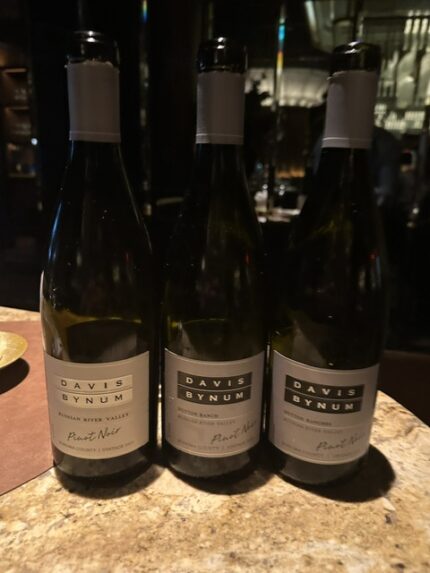
2023 Davis Bynum ‘River West’ Chardonnay
2023 Davis Bynum Dutton Origin Chardonnay
2023 Davis Bynum Russian River Valley Pinot
The 2022 Dutton Ranches Pinot Noir leans into black cherry, plum, teaberry, cinnamon, and a round, seamless mouthfeel.
The 2019 Dutton Ranches Pinot Noir is a little riper and more muscular, with boysenberry, black raspberry, cherry-cola, vanilla-cola, and a long finish.
Davis Bynum’s story is really one of continuity: a historic Russian River Valley pioneer has stayed true to its vineyard-first roots while Greg Morthole helped translate that legacy into a modern, balanced, and expressive wine program. His low-impact approach keeps the focus on site character and freshness, which is why the winery’s Pinot Noir and Chardonnay continue to feel both authentic and consistent.