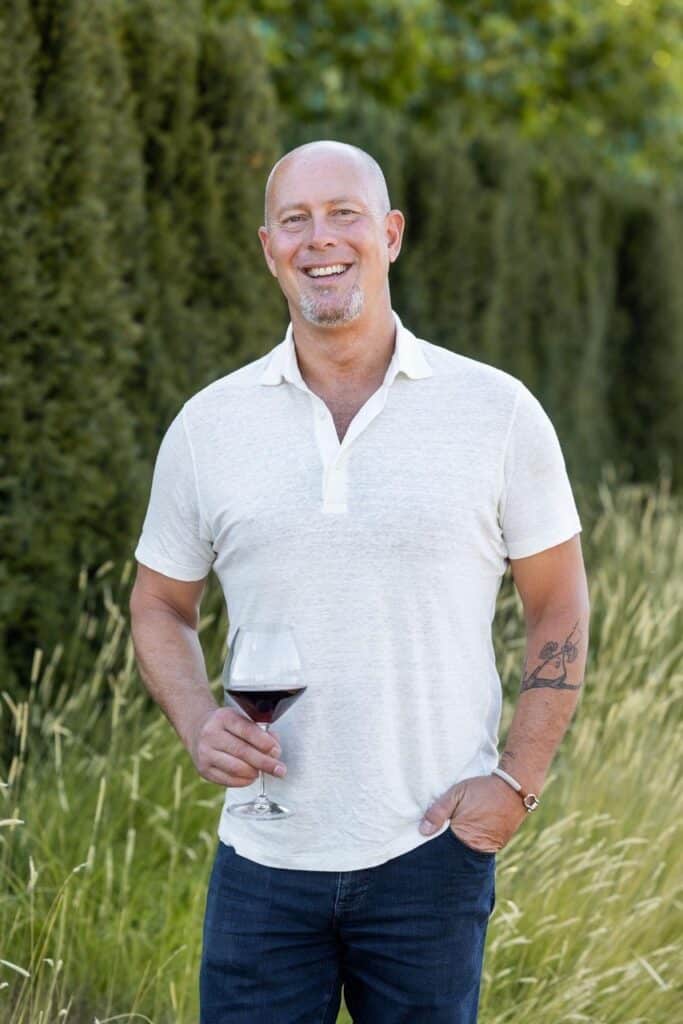
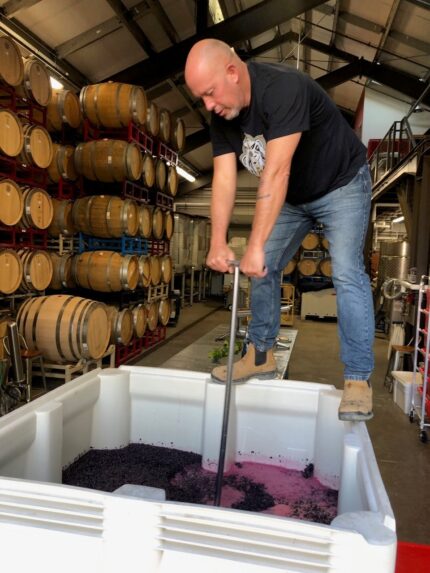
Recently, James McPhail shared the arc of his 30-year journey in winemaking—from his early days at Kistler and other wineries to buying back the McPhail brand from Hess Collection in 2024. Along the way, he talked about the projects that define him today, including Tongue Dancer Wines, which he and his wife Carrie founded in 2012, as well as his work as an independent winemaker for a range of other brands. Throughout the conversation, James’s commitment to sustainable farming came through clearly, along with the distinction he draws between being an independent winemaker and simply serving as a consultant.
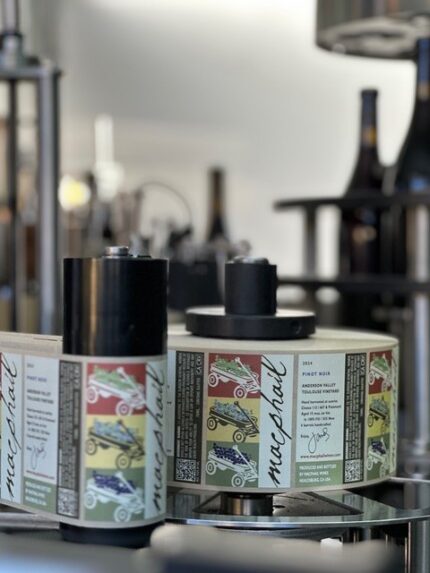
James also offered an update on the McPhail Family Wines brand. He spoke about recent sales activity in Texas and Florida, upcoming visits to the Northeast, and the excitement of reintroducing McPhail Family Wines under his own stewardship. After reacquiring the brand from Hess Collection, he is preparing to release the first wine under the restored McPhail label in May.
Looking back on his career, James reflected on the path that brought him here. Over three decades in the wine industry, he moved from working at established wineries to building his own label, McPhail, which he eventually sold to Hess Collection in 2011. He spoke candidly about the headwinds he faced, including the smoke-tainted 2008 harvest and the broader economic recession, both of which helped shape that decision. Even so, his love for Pinot Noir and the lessons of those years remain central to his identity as a winemaker and to the evolution of his brand.
He also shared the story behind Tongue Dancer Wines, the label he and Carrie launched in 2012. After leaving McPhail, James poured his energy into building Tongue Dancer into a small-production winery focused on thoughtful, site-driven wines. Today, the winery produces around 2,000 cases across 13 SKUs in its own facility. Just as meaningful, James noted that he spent years advocating for the return of the McPhail brand to its original owners—a goal finally realized in January 2024.
The conversation then turned, naturally, to the wines themselves. James described a rosé and two Chardonnays produced by the winery, offering insight into both vineyard sources and winemaking choices. The rosé, Rosé de Ville, is a single-vineyard wine from Fox Den Vineyard on the West Sonoma Coast, with just 70 cases produced. He also discussed two Chardonnays, including an appellation blend crafted from fruit sourced from three individual vineyards.
When speaking about Chardonnay, James highlighted two particularly notable vineyard sites—one on Vine Hill Road, known for its five-million-year-old uplifted ocean floor and classic Goldridge soils, and another in the Santa Rosa Plains. His winemaking style, influenced by the white wines of Burgundy, favors restraint and precision: minimal oak influence, no residual sugar, and none of the buttery diacetyl character often associated with heavier Chardonnay styles. He also described his Vine Hill single-vineyard Chardonnay, made from three clones and aged for 15 to 16 months using traditional methods such as whole-cluster pressing and barrel fermentation.
Pinot Noir, of course, remains at the heart of James’s story. He spoke about three different Pinot Noirs, each shaped by its own vineyard source and personality. In doing so, he underscored what it means to be an independent winemaker: hands-on involvement and full creative control from vineyard to bottle, with every decision guided by both experience and instinct.
At the end of the day, wine is never just about what’s in the glass—it’s about the people, the place, and the moments that linger long after the last sip. Whether a bottle becomes a new favorite or simply a fond memory, it adds another chapter to the journey. And that’s the beauty of it all: there is always another story waiting to be poured.