MS Andrea Immer Robinson took the floor. Leave it to Andrea, as a Master Sommelier, to set the tone with grace and wit — and to remind all of us why we fell in love with wine in the first place. This wasn’t just about tannins or tasting notes; it was about storytelling, connection, and how the right glass of wine can transport you straight to the place it developed.
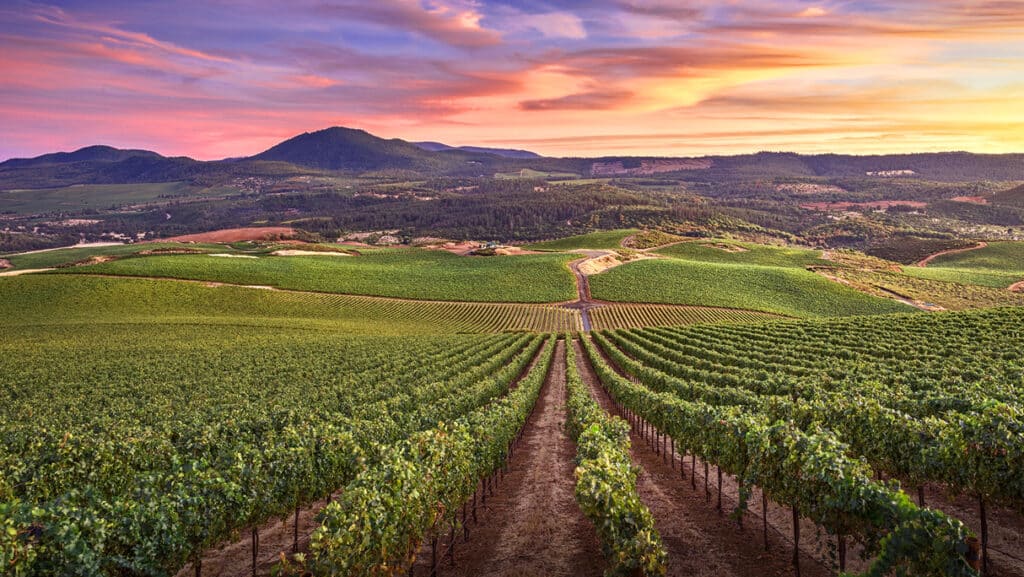
We got to explore Red Hills Lake County, along with insights on this rugged, volcanic influenced growing region that I knew very little about. The Winemakers that joined us included Kirk Venge (B Cellars/Crimson Veil, Jesse Giacomelli (Beckstoffer Vineyards), Peter Molnar (Obsidian Ridge), and Keith Emerson (Vineyard 29/atLarge) who shared their perspective and bottles of their Cabernet Sauvignons.
Our first pour came from Beckstoffer Vineyards, located high in the Lake County Red Hills AVA. The moment I lifted the glass, there was a whisper of volcanic soil — dark fruit, mountain herbs, and that textured minerality that only comes from vines grown in elevation.
Obsidian Wine Co.’s Peter Molnar, who knows these hills like an old friend, painted the geological picture for us: decomposed basalt, geothermal fields, and a layer of sunlight that hits the vineyard differently, shaping both grape skins and the people who tend them.
Beckstoffer Vineyards’ Jesse Giacomelli and Kirk Venge of Crimson Veil built on that story, diving deep into the nuances of soil and vine life. Jesse explained how the lack of viral pressure in the Red Hills gives vines a longer, healthier lifespan, while wild sage scattered across the vineyard adds subtle layers of spice to the nose. Kirk talked about the challenges of working this rugged terrain — the intense UV exposure, the trunk disease management — but his tone carried admiration, not complaint. There’s clearly a pride that comes with farming where nature demands both respect and patience.
Our last wine was the atLarge Amber Knolls Cabernet Sauvignon. Winemaker Keith Emerson described it best: high-elevation fruit meets rocky soils, creating a wine that feels as grounded as it is graceful. The tannins were beautifully managed, structured but soft, showing how thoughtful farming and cooler fermentations can yield mountain fruit that’s approachable even now.
As the glasses emptied and conversation drifted, Andrea circled us back to a point of reflection — the 50th anniversary of the Paris Tasting. She reminded us how that event redefined American wine and storytelling, how a single blind tasting brought Napa to the world stage. And sitting there, surrounded by some of the best voices in wine, discussing the promise of Red Hills, it struck me: this was another chapter in that evolving story.
Connection. Discovery
A genuine appreciation of the land. That’s what makes these sessions special — not just the swirl and sip, but the reminder that every bottle is an invitation to understand a place, a climate, and a person’s craft.
And for about an hour, in that virtual room, wine once again did what it does best — it brought us together.
Wines We Tried
2023 Beckstoffer Red Hills Cabernet Sauvignon
Intensely aromatic with blackberry, violet, and graphite. Volcanic minerality gives structure and energy, while mountain herbs whisper in the background. A wine with real lift and length — bold yet refined.
2023 Crimson Veil/B Cellars Vineyard Cabernet Sauvignon
Juicy and layered — think black cherry, cassis, and cocoa dust. The rocky soil and elevation bring freshness and vibrancy, while the tannins feel integrated and inviting. Proof that “mountain Cabernet” doesn’t have to mean austere.
2022 Obsidian Ridge Cabernet Sauvignon
Deep and complex, with roasted coffee, red currant, and crushed stone. You can taste the altitude — thick-skinned fruit, generous sunlight, and that signature Red Hills spice that keeps you reaching for another sip.
2022 atLarge Cabernet Sauvignon
On the nose, the first impression is pure mountain fruit with notes of blackberry, black cherry, and cassis layered with graphite, espresso, dark chocolate and a whisper of toasted oak. As it opens, subtle notes of sage, cedar, and wet stone appear.
Sitting on that virtual panel, I realized we weren’t just talking about vineyards — we were talking about perspective. About how resilience, experimentation, and respect for the land shape wines that feel alive in the glass. Each Cabernet told its own story, but together they painted a portrait of a region defined by depth and personality.
So, here’s to the Red Hills — rugged, radiant, and ready for its moment. I left this tasting not just with a notebook full of impressions, but with a renewed sense of wonder about what’s next in California wine. And as always, a reminder that the best bottles aren’t just tasted — they’re experienced.